
Studio Guide
How to Choose a Frame for a Gallery Wall
Choose gallery-wall frames by starting with the artwork and the room, then repeating one visual thread — color, finish, profile, spacing, or mood. Plan the full group before ordering or hanging so mixed pieces still read as one composition on the wall.
Updated August 5, 2026
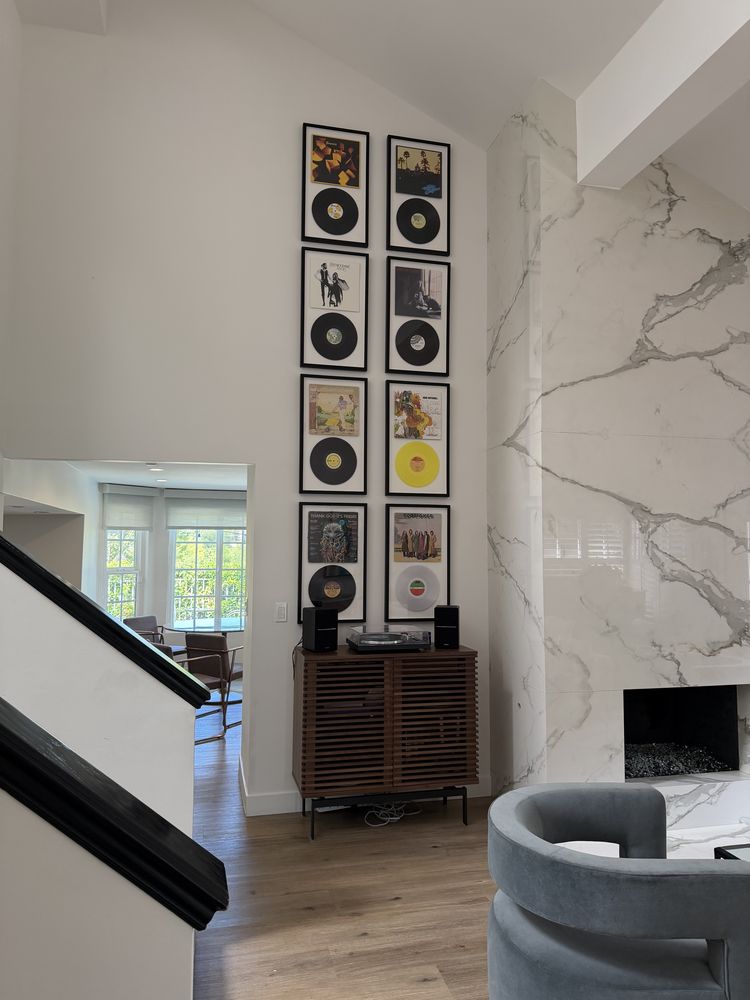
That shared thread can be subtle. Matching black profiles can organize colorful album covers, while related wood tones can connect deeper frames. The frames can differ, but they should feel related on purpose.
Also think about size, mounting, glass, care needs, and hanging. Plan the full group before you order frames or start hanging. This helps different pieces form one balanced wall.
Start with the artwork and the room
First, review every piece you want to show. Fine art, photos, textiles, canvas, records, jerseys, and keepsakes each bring different needs. Their size, material, condition, and depth should guide the frame design.
Then study the room’s scale, colors, light, furniture, and layout. A slim modern frame may suit one space. Another may call for warm wood, carved detail, or a custom finish. Let each frame link the art to its setting.
Choose a consistent visual thread
A mixed collection can still look polished. Repeat one clear element across the group. Black frames can organize colorful album covers. Related wood tones can connect deeper frames.
You can also create unity through spacing, proportions, or visual weight. Each piece may use a different build method while sharing a similar presence. This works well when paper, canvas, photos, and objects share one wall.
Decide whether to match or mix frame styles
Matching frames bring order to a series or repeated subject. They also help related pieces feel cohesive in larger rooms, halls, restaurants, or hotels. Similar sizes make this approach especially strong.
Mixed frames create a more collected look when the art varies. Compare every profile and material as part of the full group. Modern, classic, carved, and close-corner frames can share a wall when their scale and weight stay balanced.
Plan your gallery wall spacing and scale before hanging
Treat the gallery wall as one large layout. Measure the wall and every finished frame. Then set the group’s total width, height, and spacing. Decide whether one large piece will anchor the arrangement.
Account for furniture, trim, and other fixed features before choosing final sizes. Keep gaps and hanging heights deliberate across the display. Early planning matters most when you combine shadow boxes, float frames, or oddly sized objects.
Match the framing method to each piece
A unified wall does not need the same build method for every piece. Choose glass, backing, mounting, spacing, and depth for each item. Photos, textiles, canvas, jerseys, and records often need different framing methods.
A float frame can present canvas. A shadow box can hold objects with depth. Works on paper may need glass, including museum or UV options. Select these details one by one, then use the visible design to connect the collection.
When custom framing makes the difference
Custom framing helps when store options cannot support the collection. Odd sizes, mixed materials, or care needs may require a tailored design. Custom profiles, finishes, mounting, glass, and spacing offer more control.
Heart to Art makes and finishes custom frames in its studio. Options include modern profiles, classic wood molding, close-corner frames, and hand-carved designs. The studio also offers pick-up, delivery, and hanging help across Southern California.
Key takeaways
- Begin with the artwork, room, and desired mood.
- Connect varied frames through one clear design element.
- Plan the full layout and spacing before hanging.
- Choose framing materials and methods for each piece.
- Consider custom framing when store options fall short.
Frequently asked questions
Do all frames in a gallery wall need to match?
No. Frames can vary in style, material, or finish. Shared color, visual weight, proportions, spacing, or display style can make the group feel intentional.
Can a gallery wall include canvas, photographs, and objects?
Yes. Heart to Art frames art, canvas, photos, textiles, jerseys, keepsakes, records, and oddly sized objects. Each piece can use suitable mounting, glass, backing, depth, and spacing.
Does Heart to Art install gallery walls?
Yes. Heart to Art offers pick-up, delivery, and professional hanging for home and business projects across Southern California.
Ready to talk through your project with Ami? Call or text the studio — no forms required.
More guides
Custom Mirror vs. Off-the-Shelf: What’s the Difference?
Compare a custom mirror with an off-the-shelf option across sizing, glass, beveling, frames, finishes, delivery, and professional installation.
What Makes Hand-Carved Framing Different
Learn what makes hand-carved framing different — how carving shapes a frame’s profile, detail, and finish around the artwork or mirror it surrounds.
A Guide to Framing Art for Hospitality & Commercial Spaces
A practical guide to planning artwork, custom framing, mirrors, production, delivery, and installation for hospitality and commercial interiors.